

Residency Requirements for Signature Collectors – Spoiler Alert: It’s Still Unconstitutional
 By Andrew Zuelke
Chairman, Constitution Party of Wisconsin
This March, Democrats and Republicans in the legislature colluded to amend Act 126 (docs.legis.wisconsin.gov/2025/related/acts/126), banning people from outside Wisconsin from collecting signatures for state and local candidates. The changes passed. This residency requirement was tried before here in Badger State, in the early 21st Century. It was struck down. More on that later.
State Rep. Jim Hubertus said, “[The new law is] an important step toward strengthening the integrity of Wisconsin’s election process. This legislation ensures that individuals circulating nomination papers and recall petitions are qualified Wisconsin electors – people who live here, vote here, and have a direct stake in our communities.”
Election Integrity?
Election integrity? OK, then:
-
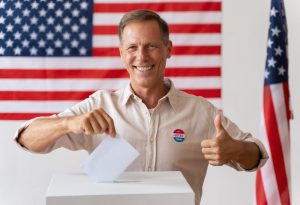
Image by freepik
Why weren’t out-of-state signature collectors banned many years ago to protect election integrity in past Wisconsin elections? Why now?
- Why does the amended legislation read that you must be a qualified elector of “this state” and not of “specific districts”? So, it’s OK for people to come into Assembly and State Senate districts they don’t live in to collect signatures for candidates they can’t vote for?
- Why does the law still allow out-of-state signature collectors for presidential and vice-presidential candidates? Doesn’t that race warrant election integrity? Our party would say it does.
- Across America, Democrat and Republican candidates are always soliciting and receiving campaign contributions from those who don’t live in their districts or in their states. We’ve all received out-of-state campaign donation requests by mail and text. Democrats and Republicans, are you saying outside campaign contributions pose no threat to election integrity whatsoever? Do you think those out-of-state donors for the gubernatorial race (and past state Supreme Court races) make those contributions out of the goodness of their hearts and aren’t trying to influence our elections? Outside donors don’t “have a direct stake in our communities” either.
My assemblyman, 41st Assembly Representative Alex Dallman, voted yes for this ban. I only found that out because I emailed his office and asked. Dallman’s legislative assistant replied, “It (Assembly Bill 223) passed on a voice vote, so there was no recorded roll call listing individual members as Aye or No.” The assistant added that “The bill was Republican-authored, recommended 6-1 by the Assembly Campaigns and Elections Committee, and news coverage described Assembly passage as non-controversial on a voice vote.” In other words, the bill came from the party that says they are the party of competition. I guess they mean economic, not political, competition. If these changes are needed and not controversial, why is there no recorded roll call listing?
A Successful Lawsuit

Blogtrepreneur, CC BY 2.0, via Wikimedia Commons
In 2003, party members John Clark, the late but great Ed Frami, Calvin Zastro of the Michigan party, and Michael Schultz were plaintiffs in a lawsuit they filed against Steven Ponto, then the chairman of the Wisconsin State Elections Board. The case, 02-C-515-C, is available to read at www.wiwd.uscourts.gov. Clark ran for Adams County Register of Deeds, and Schultz ran for the House of Representatives, 6th District. Both men got enough signatures to get on the ballot, but Chairman Ponto denied them ballot access because signature collectors Frami and Zastro lived outside the candidates’ districts. Long story short, District Judge Barbara Crabb issued her ruling that the residency requirement of Wis. Stats. 8.15(4)(a) and 8.40(2) violated the 1st Amendment, and she granted the plaintiffs’ request for a permanent injunction keeping the defendant (Ponto) from enforcing the residency requirement.
In other words, the Constitution Party of Wisconsin (CPoW) is the reason candidates from all different parties and independents could have signature collectors from outside their districts or the state come in and help them get enough signatures to get on more ballots.
Less Competition
Since it seems the Democratic and Republican Parties haven’t learned their lesson or don’t value the 1st Amendment, they are attempting a residency requirement again. The Wisconsin Institute for Law and Liberty (WILL) filed a lawsuit this April arguing that a residency requirement is unconstitutional because “petition circulation is core political speech” protected by the 1st Amendment.
“These restrictions shrink the pool of available circulators for Wisconsin candidates, prevent candidates from associating with out-of-state supporters and thus limit the dissemination of political messages,” the lawsuit claims.

Image by magnific
WILL deputy attorney Lucas Vebber called me last May as head of the CPoW and discussed the lawsuit and how it has now moved to federal court as a constitutional issue. I said, “Lucas, this ban of out-of-state collectors sounds like Democrats and Republicans trying to keep parties like ours from getting enough signatures to get our candidates on the ballot, to have less competition.” Lucas replied, “Andrew, that’s exactly why they did it.” Vebber also said to me that this ban violates freedom of association and could also violate interstate commerce. As I wrote, lawmakers tried to create a residency restriction on signature collectors over twenty years ago, and the courts struck it down (the 7th U.S. Circuit Court of Appeals). Vebber wrote in a May 1 media post, “In March, Wisconsin decided to bring it back. It’s still unconstitutional,” said Vebber. “Government does not get to pick who you can associate with.”
Wisconsin Act 126 was amended to make it harder for alternative parties and independents to offer you more ballot choices, to eliminate competition. Election integrity has nothing to do with it. Ask your legislator if he voted yes on AB 223. If so, ask him any of the questions I posed.
So, when you have fewer candidate choices on your ballot this November and in future elections (and you will), you can thank the Democrats and Republicans who hate competition from alternative parties like ours and from independent candidates.
Listen to this blog post as an audio file below.